First of all, congratulations! Your hard work HAS paid off. It may seem anti-climactic with the lack of formal celebration, but we are proud of you and we are cheering for you!
One of the more important things to remember as a new grad is that the transition into the “real world” (as many call it) can be challenging. It’s not easy to go from higher education to working a full-time job! It is also important to remember that your plans have likely changed, it may be challenging to get a job right now, and even if you are fortunate enough to have secured one, it probably doesn’t look the same as it did a few months ago. For these reasons and more, it can be hard to have a clear plan of what is next. College graduation can be a tough transition for many and is even tougher now, due to the impact COVID-19 has had on higher education and the global economy. This is why it is more important than ever to be easy on yourself. Remind yourself of why you got a degree, and of how proud of yourself you are for completing it. Be gentle with yourself.
Research and Understand your Student Loans
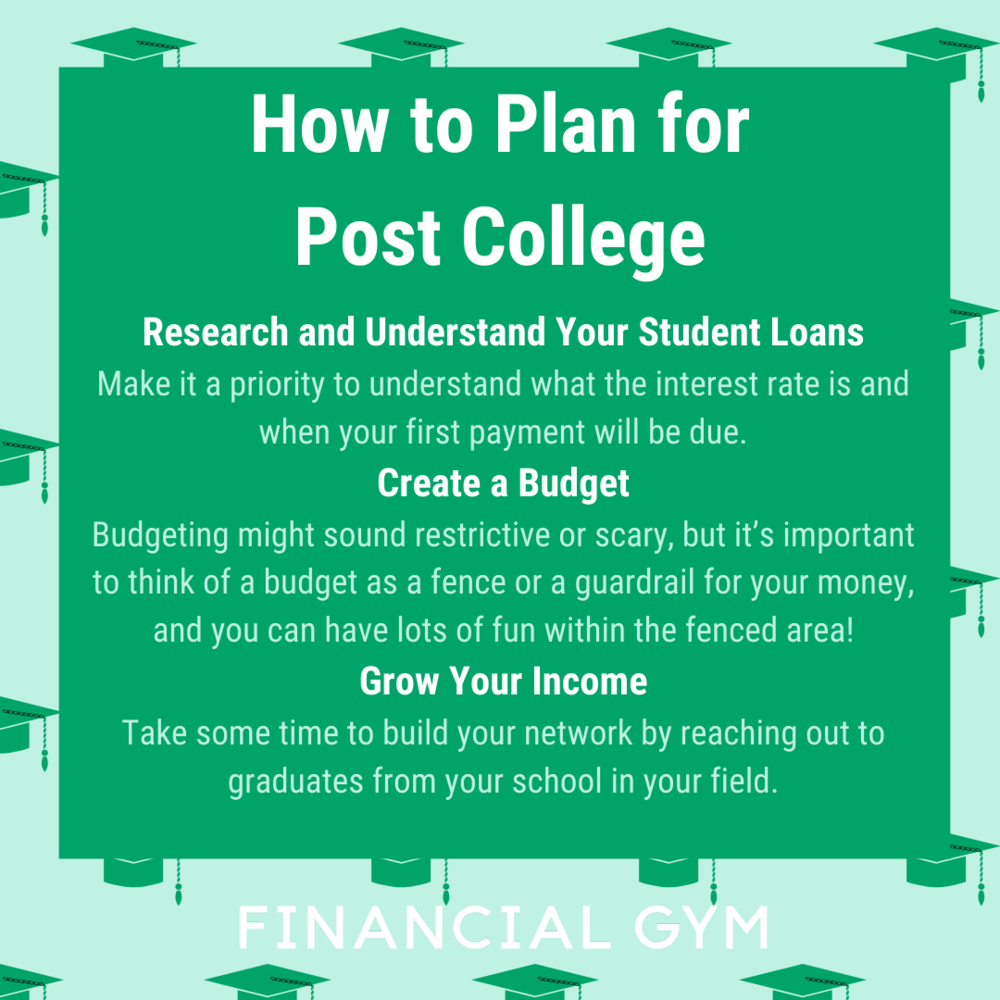
More than 40 million Americans have student loan debt, if you’re one of the millions of people graduating from college with student loans, remember, you are not alone! Take some time to understand your student loans, are they privately held or are they federal loans? Make it a priority to understand what the interest rate is and when your first payment will be due. Learn more about different repayment options and programs, and understand what consolidating or refinancing are and how they may benefit you. In many cases, you have a short period of time between graduation and the day your first payment will be due. If that’s the case for you, try building your monthly student loan payment into your budget even if the payment isn’t due! You can use this simulated payment to build your emergency fund (3-6 months of savings) or work towards other financial goals!
Create a Budget
When creating a post-grad budget, it is important to list out the expenses that you will be taking on monthly. Do you have rent to pay? What are your monthly grocery costs? Utilities? Subscriptions? It is important to know how much you absolutely must spend each month before creating a budget that includes spending, saving, and debt repayment. We know that it may be challenging to estimate all of these costs, so the first step is just to take note of what you are spending so that your fixed expenses are properly depicted in your budget.
Once you’ve established your monthly bills or fixed expenses, it’s time to build your budget! Budgeting might sound restrictive or scary, but it’s important to think of a budget as a fence or a guardrail for your money, and you can have lots of fun within the fenced area! At The Financial Gym Advisors, we want you to spend your money on whatever makes you happy and aligns with your goals, and the first step before spending your money is building your budget! When you start building your budget, you should aim to save 10-20% of your gross income. This savings goal will help you build your emergency fund, which should be at least 3-6 months of living expenses. From there you should establish other goals you want to work towards, like saving for a trip, finding an apartment, or getting a car.
There are different methods people can use to keep their budgets on track. For some people it’s helpful to have a zero-sum budget, giving every single dollar a job. Other people find it helpful to use a cash budget with an envelope system. With this system, you would take money out of the bank for all your variable expenses and keep it in a physical envelope, when the cash runs out you’ve used up your budgeted free spending money! Try different methods and see what works for you-we find the most important piece is to establish your goals and know what you’re working for!
Grow Your Income
If you’re graduating right now and do not have a full time job secured, this might be one of the biggest challenges you’re facing. Take advantage of the career services your college or university offers, many schools will continue to offer these services to graduates for the duration of their career! Take some time to build your network by reaching out to graduates from your school in your field.
Job searching during Covid-19 might make it challenging for a recent graduate to find their dream job. Don’t get discouraged but be realistic about your options and your income. Prioritize building your resume in whatever way you can! If you’re having a hard time finding something full time, think about adding side hustles or growing your income from home.