As fall 2020 approached winter, I put increased emphasis on self-improvement. The year from hell needed some sort of silver lining, right?
Financial planning had long been on the to-do list, but I felt lost on where to start. Luckily, I found the Financial Gym Advisors. By taking the guesswork out of the process, the Financial Gym Advisors helped me solve my major money goals: finding a better bank with a strong high-yield savings account and choosing the right post-tax investment options to plan for the future.
Within a few months of working with a Certified Financial Trainer, I felt more confident in my spending patterns and more knowledgeable on how I could contribute to my retirement savings. Not only did my trainer help me choose a broker and portfolio strategy, but she outlined what a monthly contribution plan would like for my budget.
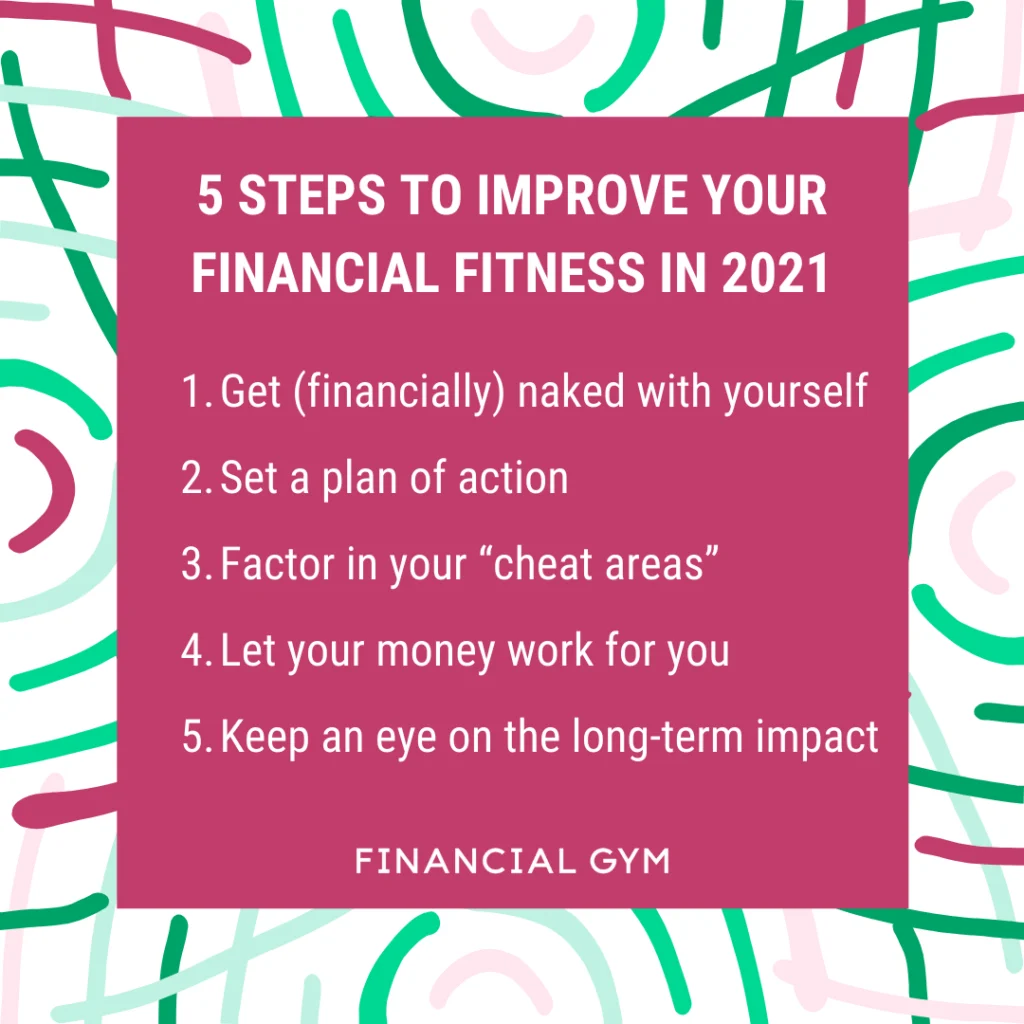
The following five steps can also help improve your own financial fitness in 2021, no matter where you are on the journey:
-
Get (financially) naked. The Financial Gym Advisors starts a membership with what they call the “Financially Naked session,” wherein you bare all to your trainer, financially speaking. That means every penny of your checking account, debt, savings, credit cards, you name it – once you know exactly where you are, it’s a whole lot easier to map where to go.
-
Set a schedule. Just like physical fitness, changes don’t happen overnight. By writing down your goals with specific, tangible objectives and reasonable timeframes, you can more easily stay accountable and appreciate your progress.
For instance, say you’re planning a major purchase like a car. Determine how much money it’ll take to hit your target cost, what amount you feel comfortable and able to save each month, and how many months it’ll take to reach the goal. With thoughtful budgeting and disciplined spending, you’re on your way.
-
Consider your “cheat areas.” A little splurge every now and then keeps you sane – think of it like a big, juicy burger on your off day from exercise. As with those “cheat days,” the key here is staying disciplined and prioritizing what’s worthy of a special purchase.
For me, that area is travel. I keep a separate bucket in my new bank account dedicated to trips and contribute a bit of each paycheck to the fund. If I really want a weekend getaway or a larger, unique vacation, it’s reassuring to know the expenses can be partially or fully covered by money I’ve already set aside for the purpose.
-
Let your money work for you. If you’re able, shift some of the money in your checking account to a savings account – ideally, one that’s high-yield. That way, your money will accrue interest at a higher rate, yet still be easily accessible should you need it. Just wish I had done this sooner!
-
Keep an eye towards long-term health. With additional disposable income, consider how you can maximize your future financial stability through investment accounts. Retirement options like an employer-provided 401k or traditional IRA (both for pre-tax income) or a post-tax Roth IRA allow you to contribute money now that accrues and compounds to be withdrawn by age 60.
You can also invest more for the short-term by setting up a standard brokerage account, with a traditional broker like Charles Schwab or a digitally native robo-advisor (my personal choice). For those new to investing, robo-advisors can be a great option. The lower costs and automated, algorithm-generated portfolios allow you to simply determine your risk level, add funds, and let the computers do the work.