
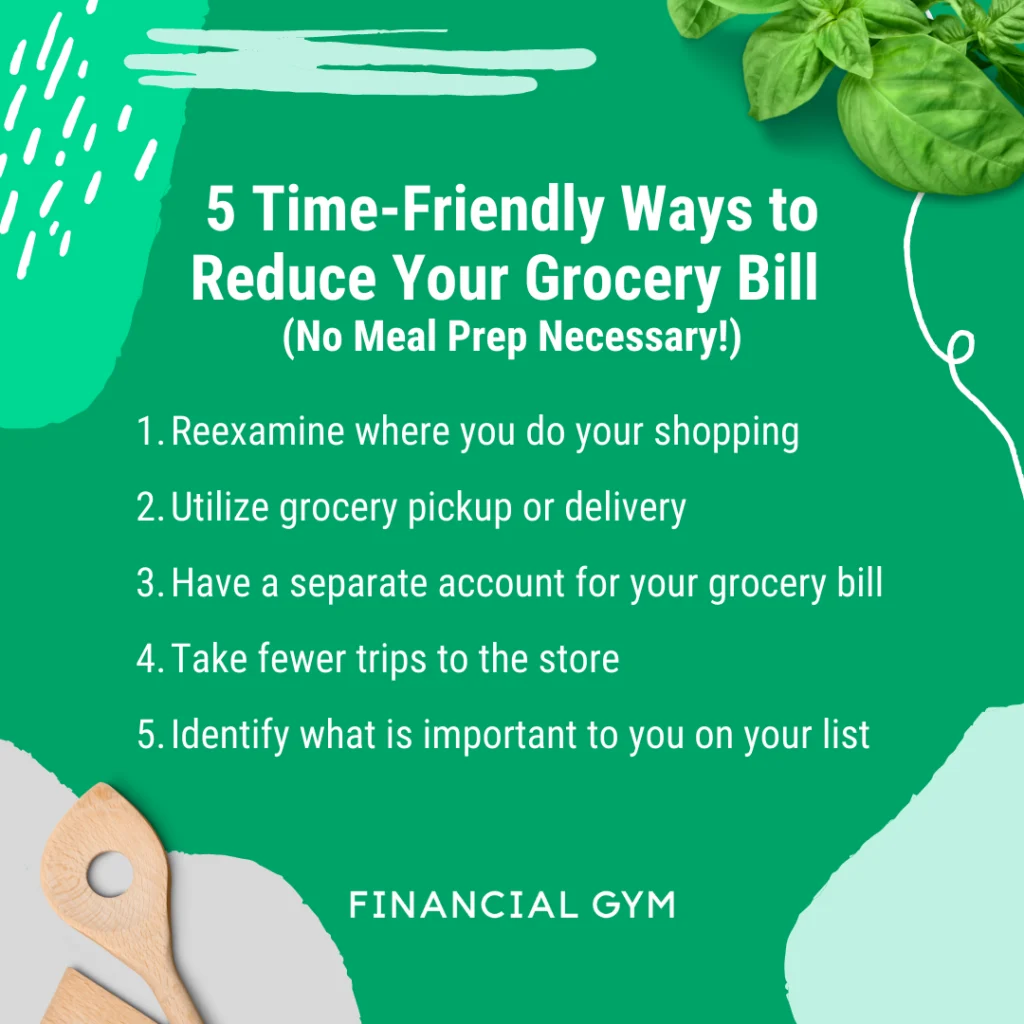
Unlike other expenses that you can go without if needed (like streaming services, takeout, or buying new clothes), groceries will always be a part of your budget. It’s inescapable. For that reason, focusing on getting your grocery bill under control can pay dividends for years to come. A lot of (still great) advice about cutting food expenses such as meal prepping and meal planning can be time consuming. Here are other ways to save without carving out more time from your schedule:
-
Reexamine where you do your grocery shopping. Your grocery bill can vary widely depending on where you shop. Buying the bulk of your food at a less expensive store can easily save you 20%-40% without compromising on quality. This doesn’t mean that you have to go without your favorite products from your local high-end grocer. Try buying your staples from a discount store every other week and pick up specialty items in between from your favorite neighborhood store.
-
Utilize grocery pickup or delivery. Selecting your groceries online can help reduce costs for shoppers with a penchant for in-store impulse purchases. Those juicy strawberries or well-frosted cake look so much more tempting in-person compared to the online photos. It’s also easier to stick to your budget when you shop online because you see your total bill before you check out. If you need to remove an item or two to stay within your budget, you can delete items from your cart without making extra work for a cashier. Remember to account for delivery fees, service fees and/or tips. Depending on where you shop and how much you spend, you may be able to get this service without any additional cost.
-
Have a separate checking account for your grocery budget. If you are working on sticking to a certain dollar amount for your grocery budget, transfer that amount monthly or weekly into an account that you use solely for groceries. This will help you easily see when you are getting close to going over budget and need to adjust your spending.
-
Take fewer trips to the store. How many times have you run into the grocery store for just one thing and come out with an armload? The more you expose yourself to the opportunity you spend, the higher your grocery spending is likely to be. If you are in the habit of swinging by the store every few days to pick up supplies, try to reduce your trips to once per week or even once every other week.
-
Identify what is important to you in your grocery budget. Knowing what food items you are not willing to compromise on and allowing yourself to buy that food guilt-free can help you give up other expensive items that you don’t value as much. If you love buying cashew butter to put in your oatmeal and give yourself that luxury, you might feel better about swapping out a $5 carton of berries for $1.50 worth of bananas.