
While queer couples have been able to obtain “domestic partnerships” for years, actual “marriage” has only been federally recognized for a little over five years (in case you didn’t realize that!). With state recognized marriage, queer couples also have to navigate their joint finances. There are so many different ways to manage finances as a couple! Here are some tips for embarking on that journey-including lessons my husband and I have learned!
Here at The Gym, when working with couples we usually suggest joining finances into one pot. When couples are working towards the same goals, it makes the most sense to combine finances. Some people may worry that they will lose their independence when combining finances. We recommend couples have separate discretionary funds, especially when independence is a concern. Partners can use that money for gifts, or personal items that aren’t necessarily joint goals or expenses. There is also psychological proof that couples who completely join finances tend to be happier and have a stronger relationship than couples who do not.
Personally my husband and I got married in our late twenties so we both had some “financial baggage” and originally we tried to keep things separate. At first, we had a joint account for our home expenses but we were too shameful to talk about our debt. We were trying to work separately towards the same goals and it created a lot of anxiety and unneeded stress. When we finally sat down and combined finances–yes, including our debts–it was difficult, but it helped us work towards our goals. Combining finances at first gave such a feeling of permanency it felt like losing our independence. Dan was initially weary about it because he thought it would make him feel “trapped” and I was anxious of having to show him ALL of my numbers. However as we started paying down debt, talking about our finances, financial goals, and purchases, it helped us become closer as a couple. It helped us open our communication, and feel good about our financial decisions. If we hadn’t combined our finances, I’m not sure we would both be where we are currently are.
One more point I like to bring to my married clients who keep their finances separate, becoming legally married in the eyes of your state means your spouse’s income, and debt, are now yours as well. I was curious to know if there was a difference between queer couples who join finances compared to non-queer married couples that combine their finances. While I didn’t do a fully scientific study, like the millennial I am, I took to social media and polled those in some of the queer groups I belong to. I compared my results to a study done by a British cohort study of straight couples’ finances:
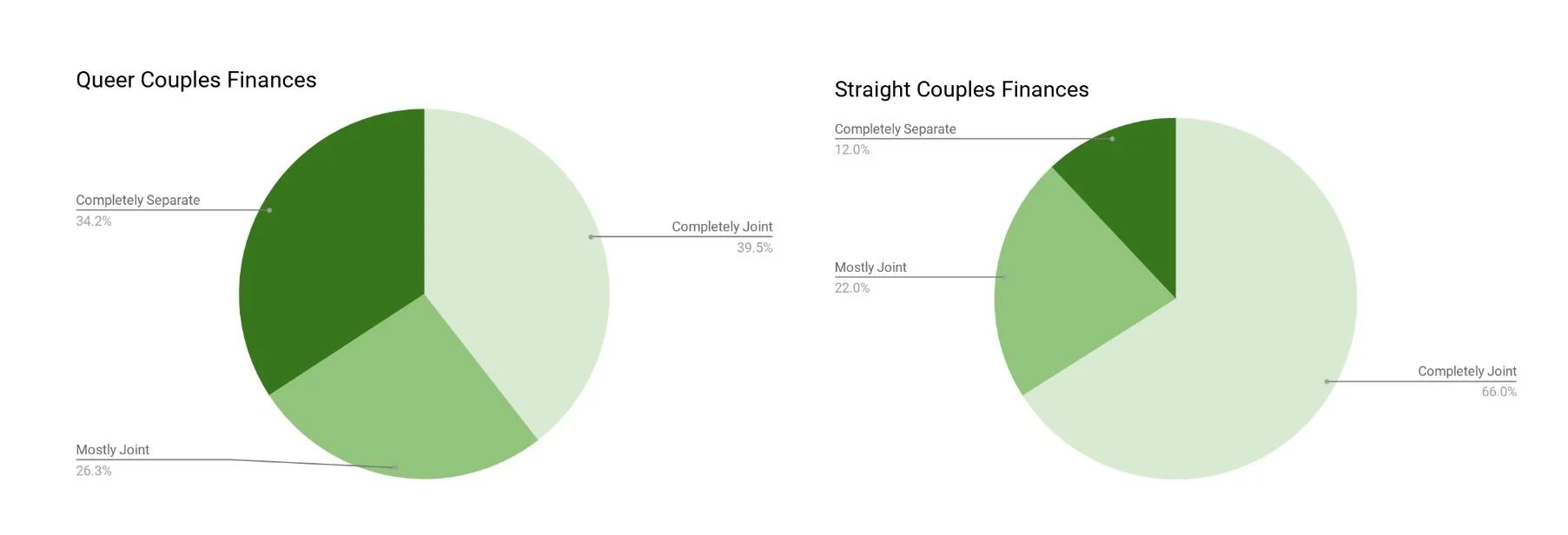
So why is there such a difference in how queer married couples manage their finances compared to those of our non-queer married couples? I think there could be a lot of factors. For some, I think the idea of combining finances might be too “traditional” and a lot individuals in the queer community don’t necessarly want to be just like traditional couples. Sometimes I think there’s a lot of shame from past financial decisions, and individuals feel too shameful to be open with a partner. Sometimes I think individuals might not be “financially faithful” to their partner, or sometimes as a financial trainer, I often see the pressure from my queer clients to “keep up with the joneses” is intensified. This might come from a place of trauma or family insecurity. While I think money and finances are taboo in our society, I think it’s even more taboo in the queer community.
So what can you do if you and your partner are not currently combining finances but want to start? Here are some steps you can take to start to combine finances:
-
Get financially naked with your partner: bring ALL your numbers to the table and work together to put them into a spreadsheet. This would include your separate bank accounts, debts, and expenses.
-
Start with a goal of a joint emergency fund! To do this, determine what 6 months of joint expenses are.
-
Discuss what you both want to work towards: a big trip, new house or vehicle, kids?
-
Make timelines for those goals!
-
Set up a plan to pay down debt – remember you’re both on the hook now that you’re married.
-
Create a weekly spend goal, and keep each other accountable.
-
Continue to talk about finances by making money dates, maybe every Sunday as you get ready for the work week, discuss any upcoming expenses you may not have been able to plan for ahead of time.
-
Talk to friends and family openly about finances and money. If you want to spend time with family or friends but they suggest doing an activity that doesn’t fit into your budget be honest! Let that person know you want to spend time with them, but suggest a different activity and let them know why! You’d be surprised by how many people realize they don’t need to spend money to have quality time with those they love.
A Financial Trainer can help in any stage in your relationship! Whether you’re getting ready to combine your finances and want a third party to help guide that conversation or you need some extra accountability and motivation to reach your goals-we are here for you!