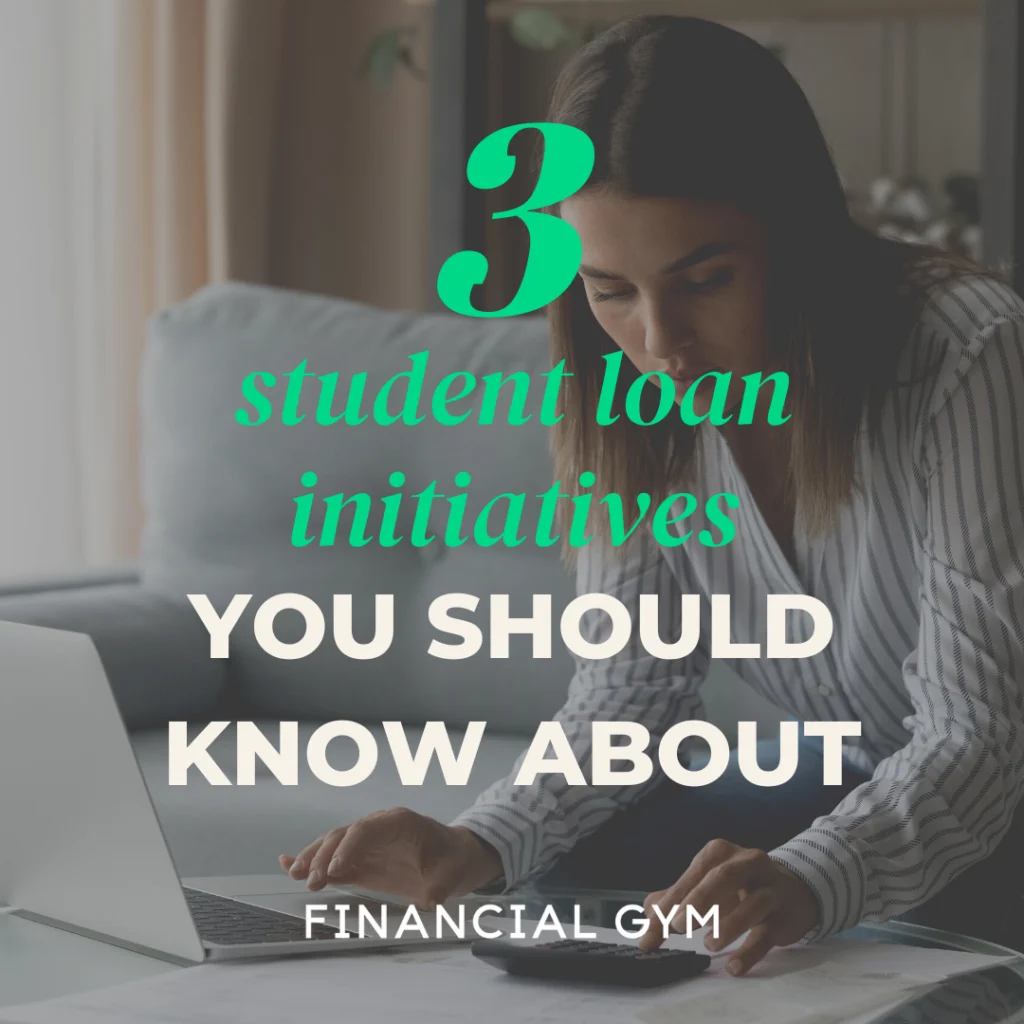
If you’re confused about where you stand with student loans, you’re not alone. Over the past year, so many programs have been announced that it can be hard to keep track of them all, never mind understanding whether they apply to you. Here’s a roundup of three federal student loan initiatives that you should know about:
SAVE Repayment Plan
The SAVE repayment plan is billed as a new income-driven repayment plan for federal student loan borrowers that will offer the lowest monthly payments. It will replace the REPAYE pan, which is currently the most used income-driven repayment plan.
Who is it for: Federal student loan borrowers who need a lower monthly payment than they can get with the standard 10-year repayment plan. The SAVE plan will be especially beneficial to borrowers with undergraduate loans.
What are the benefits: The SAVE plan has some major improvements over the current income-based repayment plans.
-
Lower payments: The SAVE plan will offer the lowest payments of any of the income-driven repayment plans because it will exempt more income from factoring into your payment amount. It will also reduce the income percentage that undergraduate borrowers need to pay from 10% on the REPAYE plan to just 5%on the SAVE plan. Borrowers with a mix of undergrad and grad loans will pay somewhere between 5%-10% of their income toward their loans. The income percentage reduction is not expected to be implemented until July 2024.
-
Loan balance will never increase: As long as you make your monthly minimum payment, unpaid interest will not be charged meaning that your balance will never grow due to interest.
How to find out if you qualify: Anyone who is already enrolled in the REPAYE program will be automatically enrolled in SAVE once the plan is up and running. If you aren’t on the REPAYE program yet, you can enroll or switch to it now. You can find out which repayment plan you’re currently on through your StudentAid.gov account.
Fresh Start
The Fresh Start program is a temporary initiative to help federal student loan borrowers who are in default. If you went months or years without paying your student loans before the COVID forbearance, there is a good chance your loans are in default and you could benefit from the program.
Who is it for: Federal student loan borrowers in default (especially those who did not successfully complete rehabilitation on their first try).
What are the benefits: The Fresh Start program has several benefits for borrowers in default:
-
Credit boost: It will bring your loans “current” and remove the negative mark of “in collections” from your credit reports. This will likely boost your credit score.
-
Stop collections: It will stop any collection efforts including collection calls, wage garnishment, and the seizure of tax refunds.
-
More than one shot: It will not count as your one chance to rehabilitate your loans. This means that if you have tried and failed to rehabilitate your loans before, you can give it another shot. If the Fresh Start program is your first time rehabilitating your loans but you go back into default, you’ll still have another chance. Either way, you’ve got nothing to lose!
-
Access to aid: You will get access to federal student aid if you are trying to go back to school or pursue another degree.
How to find out if you qualify: You need to contact your loan holder to find out if you qualify. If you don’t know who holds your loans, you can call 1-800-621-3115. If your loans are held by the Department of Education, the easiest way to enroll is online at https://myeddebt.ed.gov/ or by phone at 1-800-621-3115. If your loans are held by a guaranty agency, you can find their information here on Federal Student Aid.
One-Time Account Adjustment
The one-time account adjustment addresses confusion and misunderstandings around income-based repayment plans that have affected borrowers’ timeline for forgiveness. It builds on the Public Service Loan Forgiveness (PSLF) waiver that allowed PSLF borrowers to have additional payments counted toward forgiveness. The one-time account adjustment does the same for qualified borrowers on income-driven repayment plans.
Who is it for: Federal student loan borrowers who are on (or want to be on) an income-driven repayment plan or Public Service Loan Forgiveness (PSLF) and may have payments (or periods of forbearance or deferment) that didn’t count toward forgiveness.
What are the benefits: The one-time adjustment will help qualified borrowers get closer to forgiveness by counting periods of repayment that typically don’t count toward forgiveness. These payments include:
-
Payments on any repayment plan regardless of the amount, loan type, or repayment plan
-
Long periods of forbearance (12 months of consecutive or 36 months of cumulative forbearance
-
Periods of economic hardship or military deferment in 2013 or later
-
Payments (or qualified deferment or forbearance) on loans before consolidation
How to find out if you qualify: First, you’ll need to find out what types of loans you have by checking with your student loan servicer or logging into your StudentAid.gov account. If you have Direct or FFEL Program loans held by the Department of Education and have any payments that qualify, your account will automatically be updated later this year. If you have commercially managed FFEL, Perkins, or Health Education Assistance Loan (HEAL) Program loans, you’ll need to consolidate your loans before the end of 2023 to benefit from the one-time adjustment.