
By this point, most people are well aware that gender can have an impact on their financial situation. As women, we face the wage gap, the investing gap, the pink tax, the mommy tax, etc. But many people are less familiar with the financial barriers that transgender and non-binary people experience.
The past few years have been particularly challenging for trans people and the folks who love them. As trans people gain more (much deserved) visibility, we’ve also seen a strong backlash against their rights. When trans people have to worry about harassment, discrimination, and maintaining their basic human rights, it can be difficult to get ahead financially. In honor of International Transgender Day of Visibility, we want to help bring these challenges to the forefront:
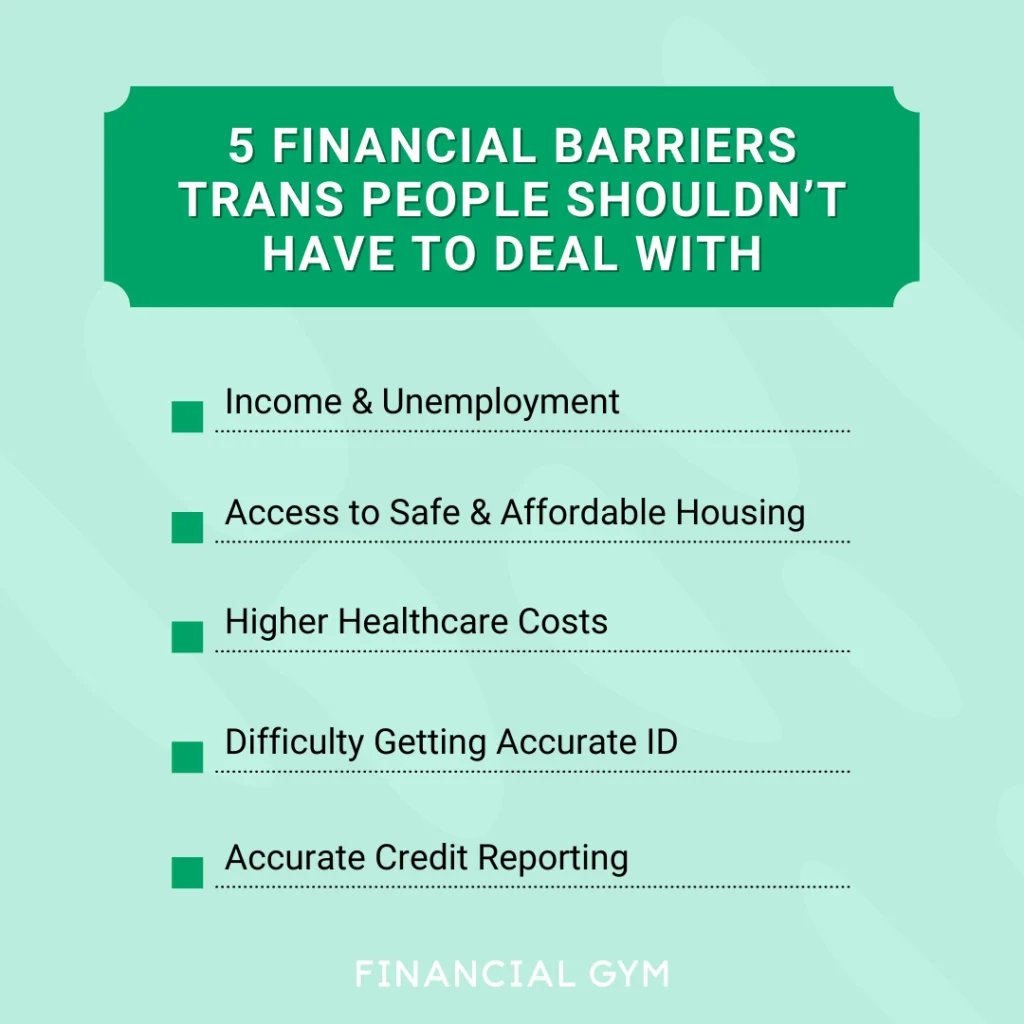
1. Income & Unemployment
Transgender people are much more likely to experience unemployment compared to the cisgender population — three times more likely according to the 2015 US Transgender Survey (USTS) from the National Center for Transgender Equality. Employment affects income, so it’s no surprise that trans people are also much more likely to face extreme poverty, particularly BIPOC trans and non-binary folks.
2. Access to Safe and Affordable Housing
Housing is one of most people’s biggest expenses and it plays a key role in financial stability. Due to discrimination, trans and non-binary people experience more difficulty accessing safe and affordable housing. Nearly 20% of trans people reported that they were denied a home or apartment because of their identity. Because of this, many trans people have to settle for less desirable housing or pay higher short-term housing costs while looking for a more suitable long-term place to live.
3. Higher Healthcare Costs
Health insurance may not cover the services transgender people need, leaving them responsible for paying thousands of dollars out-of-pocket. According to the 2015 USTS, more than half of transgender people reported that their health insurance company denied their request to cover transition surgery and 25% were unable to get their insurance to cover hormone treatment. Unfortunately, some states are also considering legislation that would prohibit doctors from providing gender-affirming medical care to minors or ban health insurance companies from covering that care.
4. Difficulty & Expense Related To Getting Accurate ID
Updating identification to match one’s gender and name can be an expensive and time-consuming process. While costs vary by state, they can reach hundreds or thousands of dollars. A lack of accurate ID can cause issues with employment, accessing public benefits, and opening bank accounts.
Here are a few of the IDs transgender folks may need to update:
-
Driver’s License
-
Passport
-
Birth Certificate
-
Social Security Card
They may also need to legally change their name through a court to update these documents.
Only 11% of respondents to the USTS said that all of their IDs had been updated with their preferred name and gender and more than two-thirds said that none of their IDs listed their preferred name and gender. The cost of changing their documents is a primary barrier for many people.
5. Accurate Credit Reporting
Retaining an accurate credit report through a name change is an all too difficult process. If the name update process isn’t followed precisely, transgender people can end up with two credit reports, which is a huge issue for people with good credit history.
In addition to informing their banks and creditors of their name change, trans people also need to update their name with the credit bureaus (Equifax, Experian, and Transunion). All three credit bureaus allow trans people to update their names on their credit reports if they have the necessary documentation, but trans people must make sure to follow each credit bureau’s process.
Even going through this process might not always have the desired effect. Some trans people find that their deadnames still appear on their credit reports, and unfortunately, this can perpetuate housing, employment, and lending discrimination.
Learn More & Support Change
To learn more about the financial barriers that trans and non-binary people face and support change, check out the following organizations:
-
The National Center for Transgender Equality is a national organization working to change policies to advance transgender equality.
-
The Center of Excellence for Transgender Health is working to increase health equity for trans and non-binary people.
-
The Transgender Law Center has challenged the legal system to extend the rights of transgender and gender-nonconforming people. They have programs focused on empowering Black trans people, trans folks with disabilities, and trans people with HIV.
-
The Trans Women of Color Collective raises awareness about the lived experiences of trans women of color. They cultivate affirming spaces for their community and support them financially through their community funds.
-
The Transgender Legal Defense Fund is working to end gender identity-based discrimination through education, litigation, legal services, and public policy changes.
-
The Sylvia Rivera Law Project is focused on increasing the political voice of low-income and people of color who are transgender, intersex, or gender non-conforming. SRLP also works to increase the community’s access to social, health, and legal services.
-
For the Gworls is a collective that helps Black transgender people pay for their rent and afford gender-affirming surgeries.