The temptation is real to spend more money online while most of us can’t go out and about during coronavirus. Let’s just accept that. You’re probably spending more time on the internet and therefore you’re the target of more ads. And let me tell you, retailers are trying to entice you with sales galore! But that doesn’t mean it’s inevitable that you’re going to overspend and make regrettable purchases.
Here at the Financial Gym Advisors, we’re not against online shopping. We just want to make sure you’re spending your dollars on things and experiences that matter to you and add value to your life and not on things that lie dormant in your closet or never have their tags removed.
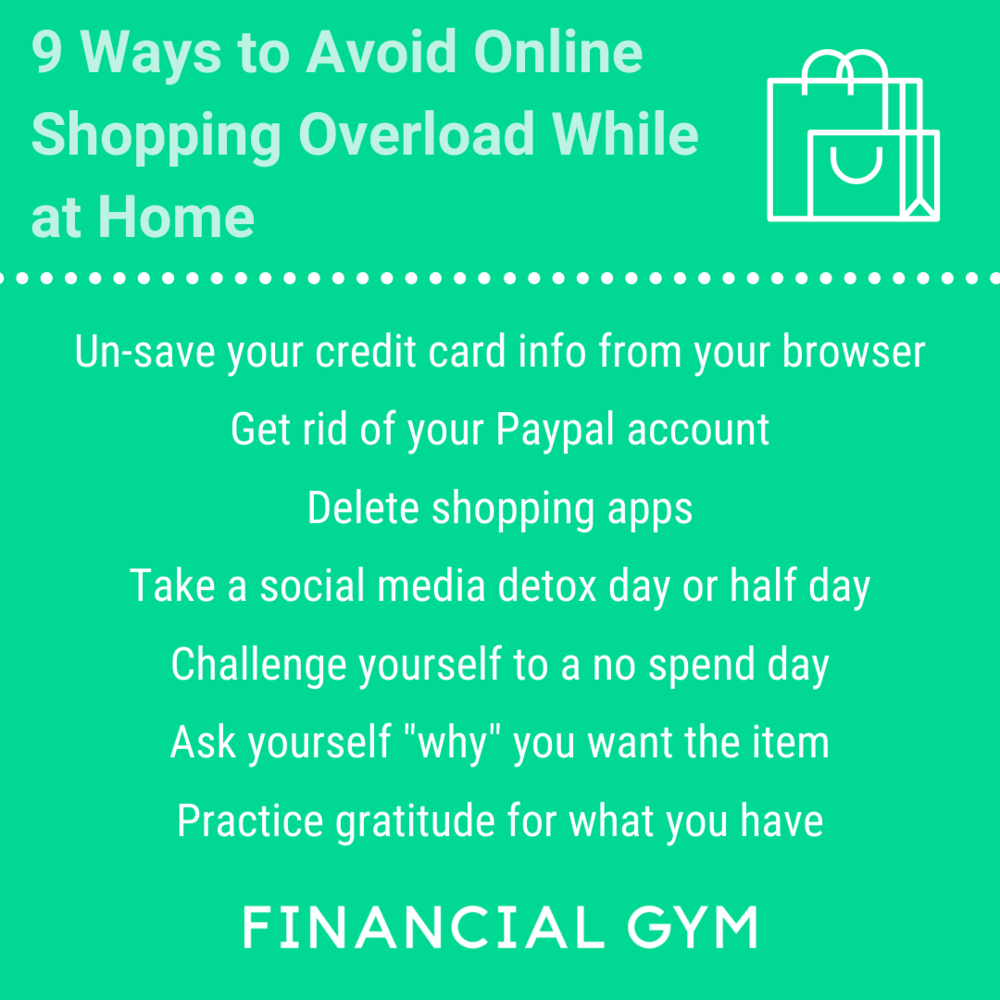
You might have some work to do in terms of engineering an environment that makes it harder for you to purchase anything online. Additionally, you might need to do some internal work to clean up some limiting beliefs you have. Here’s a list of both external and internal practices to keep you from overspending online:
-
Un-save your credit card info from your browser so that it doesn’t just auto-fill when you want to buy something
-
Get rid of your Paypal account so you’re not just one password away from a purchase on most sites
-
Delete your payment methods from all of your frequently visited shopping sites
-
Delete shopping apps from your phone
-
Unsubscribe from retail emails (you know which ones tempt you!)
-
Take a social media detox day or half day. The joke is that Instagram is basically just an online mall now with all the sponsored #ads. Do yourself a favor and leave the digital mall behind for a bit!
-
Make it into a game and challenge yourself to a no-spend day, weekend, or week! Check out our No-Spend Calendar printable here.
-
Put on your psychologist hat – why do you think you overspend? Your own insight is valuable! As humans, we often seek what is familiar. Depending on your upbringing and spending habits, “familiar” to you might be splurging every payday and then running out of money before the next direct deposit hits. But “familiar” doesn’t necessarily mean healthy, and you may have gotten into some habits that don’t serve you or your financial health.
-
Ask yourself some probing questions: do you think you’re worthy of a healthy relationship with money? (If your answer is, “no”, then why not?) What is it that you’re really seeking when you press “Add to Cart”? Usually, when we overspend, we’re after a certain feeling. Subconsciously or not, we believe that buying Item XYZ will give us this feeling. But you can achieve that same “high” from other activities that don’t don’t cost you a significant chunk of your paycheck. Treat yourself by doing the research to find the activities that feed your soul, especially as we’re in “corona times.” The free online resources are endless in terms of e-books, audiobooks, online courses, webinars, etc.
-
Celebrate past purchases that you’re still happy you made years later! What are the things that you’d categorize as your “best purchases ever”? Focus on those moments and practice gratitude for being able to spend on things in alignment with your values. This will help you to sniff out a mindless purchase before they even happen!
In case no one has ever said this to you, you’re worthy of a healthy relationship with money. It’s not contingent upon how much money you make. It’s not contingent upon your genes. There is no “good with money” gene that you’re lacking. You can do this!!
PS – We’d love to hear how you’re staying away from online shopping during this time! Let us know on Instagram!