This blog post is part one of a series of four, all about investing. We are going to start with the basics and move on from there. Stay tuned for the rest!
For many folks, putting money into the stock market can be a scary thing. There is definitely risk involved, but there is also the opportunity to have your money earn money for you without you lifting a finger. This gives you opportunities to achieve your goals (whether those goals are financial or not, as everything in life has a price tag attached to it).
If you don’t have a lot of money to invest, even the smallest of ways can add up and when invested correctly for your goals. Investing can really help to build your personal wealth. However, before you even begin to invest it is important to establish why you are investing – what goals are you saving for? We know that not everyone may have a perfect plan of what their future self will want to spend money on, but it’s important to note that investing strategies may differ depending on the timeline of use for the money. We will dive into this deeper as you read on!
We are going to talk about personal, taxable investing (separate from retirement savings). The reason you should be investing is because of the power of compounding interest. To give an example, if you started with $10,000 and put that in the stock market with an average growth rate of 7% (average for the stock market is 6-8% annually) then in 25 years that $10,000 would now be $42,415. That’s just from your money earning money.
What are the steps you do once you’ve opened a taxable brokerage (investment) account? You need to determine your asset allocation. Assets include stocks, bonds/fixed income, and even cash. Unless you pick specific stocks, bonds/fixed income, etc. to invest your money in, it’s going to stay in cash in the account (which doesn’t earn you anything).
What you choose to invest in depends on when you plan to use the money. Stocks are more aggressive than bonds are. So the sooner you want to accomplish your goal, the less amount of stocks you’ll want to have in there. We usually suggest that if you are planning on using the funds in the next 3-5 years, then you can invest your account in 60% stocks and 40% bonds/fixed income.
That’s wonderful, but what are stocks and bonds?
-
Stocks. Stocks allow you to purchase “a piece of a company.” This allows you to share in their success; the better they do, the higher the perceived value of the company is, the more the value of your stock will rise.
-
Bonds. Bonds essentially allow you to purchase someone’s debt. The company thanks you by paying you interest each year and then at the end of the bond period, you get your original money back (pending the bond market isn’t currently down at that time or the company hasn’t gone under).
It’s important to note that you do earn money with both, but bonds don’t yield as much as you stand to earn with stocks. Stocks and bonds have an inverse relationship with each other. When stocks are down, bonds are up and vice versa. It’s usually a good idea then to have at least a little bit of bonds in your account to essentially “hedge your bets.”
There are other investment vehicles besides just individual stocks and bonds, and those are items like ETFs (exchange traded funds) and mutual funds.
-
ETFs and Mutual Funds. Both of these are basically buckets of a whole bunch of different funds. They can be buckets of either stocks or they can be buckets of bonds.
These are great options because they give more exposure to various companies that you may not have otherwise been able to invest in because you didn’t have enough to purchase a share of each individual company/bond.
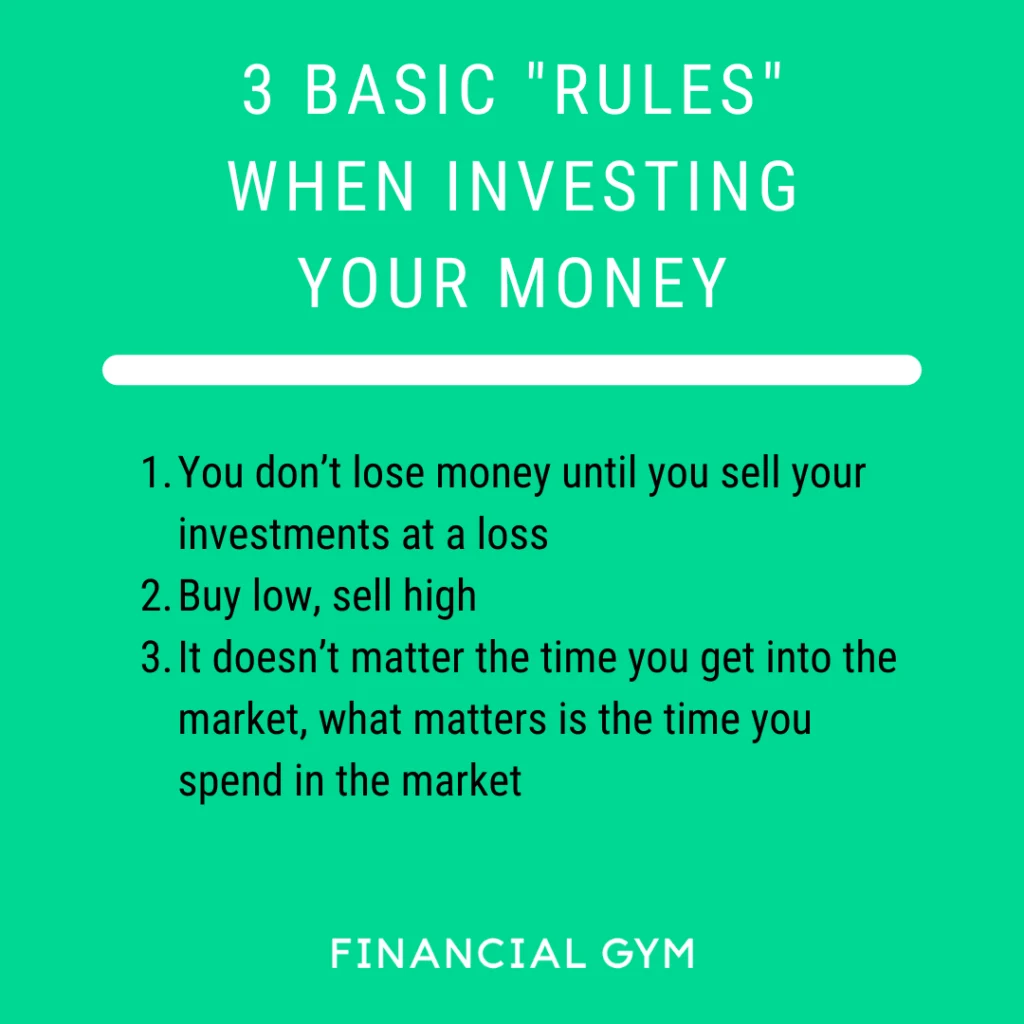
Now that you have started investing, here are some “rules” to keep in mind:
1. You don’t lose money until you sell out of your investments.
2. Buy low, sell high.
3. It doesn’t matter the time you get into the market, what matters is the time you spend in the market (i.e. a long term investment strategy is best).
If you’re interested in checking out our most recent Investing 101 Wine and Learn, you can watch the recording here.