You’ve probably heard of different budgeting methods and wondered which is best, but the truth is that there is no one “right” way to budget. We love our analogies here at TFG, so stick with us for this one: the practice of budgeting is kind of like baking. Many baked goods have almost the same ingredients: flour, sugar, butter, and eggs. But even with common ingredients, you can end up with different delectable dishes such as cakes, cookies, and muffins. Budgets also have common ingredients: income, expenses, and savings/debt repayment. Depending on which budgeting “recipe” you follow, you could create a 50/30/20 budget, a zero-based budget, a cash budget, etc.
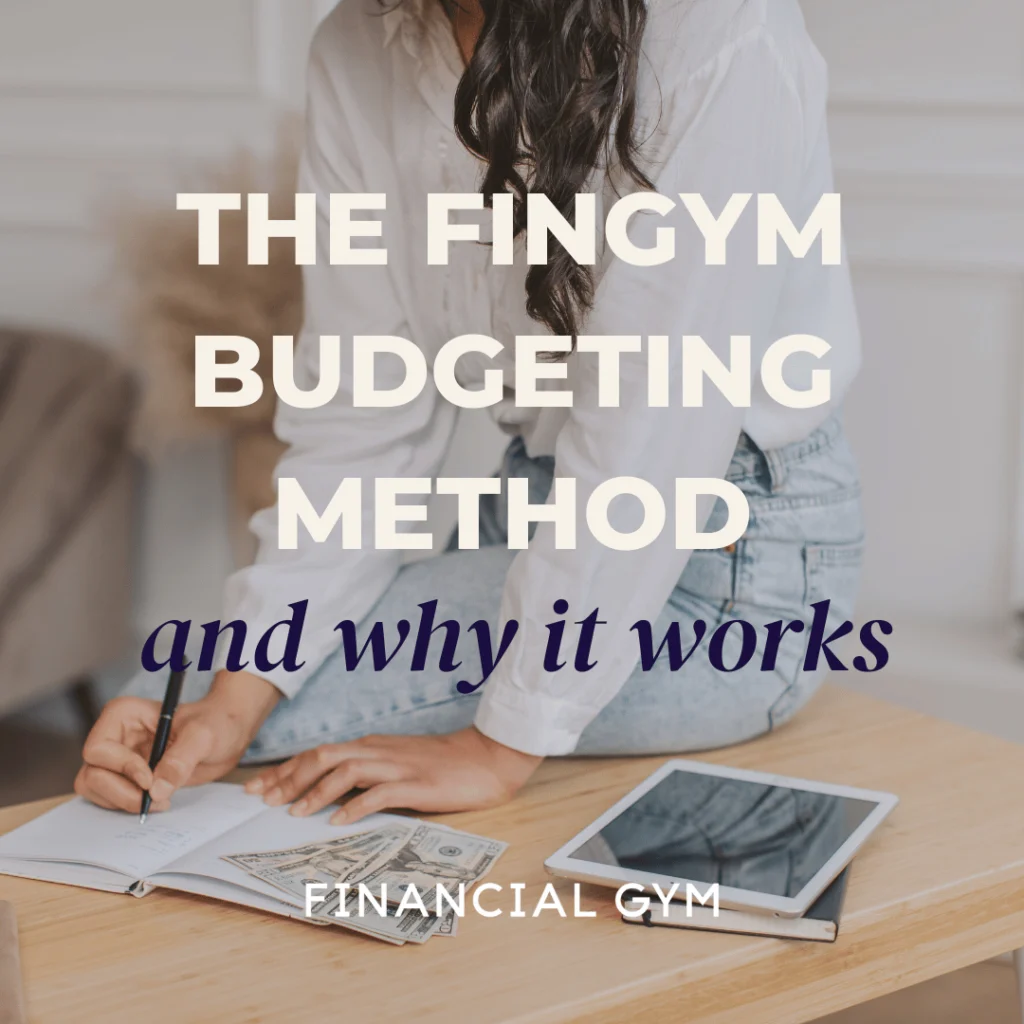
The FinGym Budgeting Method
At TFG, we’re focused on giving you a great financial foundation and helping you accomplish your life goals. For this reason, we follow a goals-based budgeting method. Goals-based budgeting focuses on determining how much you need to save each month to achieve your goals on a specific timeline. Want to max out your Roth IRA for the year? Contribute $500 per month. Want to pay off your $5,000 balance transfer card before the end of an 18-month intro offer? Pay $280 per month. Want to take a $3,000 vacation next year? Save $250 per month.
Once we’ve determined all of the monthly amounts you would ideally put towards your goals, we need to compare that to the amount of money we have to work with. To do this, we subtract your fixed expenses (monthly bills) from your income. The amount leftover is how much we have to allocate towards your goals and variable expenses. At this point, we will start adding in your savings goals until all we are left with is a reasonable amount for variable expenses. This “reasonable amount” can vary depending on an individual’s lifestyle and the cost of living in their area.
Not surprisingly, we often find that the amount we need to save for all of our goals exceeds how much we can save based on our current income and expenses. That’s ok! It’s just a sign that we need to prioritize what is most important to us or make adjustments to our expenses and income to make it work.
Why It Works: The Weekly Spend
Rather than allocating specific amounts for each of your variable expense categories, the FinGym budgeting method does not distinguish between types of variable expenses. For example, a zero-based budget would encourage you to break down your variable expenses and allocate a specific amount towards each category. For example:
-
Groceries = $300
-
Dining out = $200
-
Shopping = $250
-
Gas = $250
-
Total = $1,000
-
Instead, we break down your total monthly variable budget into a “weekly spend” amount that can be applied to any variable expense. Using the same example of having $1,000 per month for your variable spending, your weekly spend would be $230.
-
$1,000 / 4.33 = $230
(We divide your monthly variable spend by 4.33 to account for the fact that most months have more than four weeks in them.)
The weekly spend is the key to a FinGym budget. It gives you a tangible, short-term guideline to work towards and you get to start fresh each week. If you go over one week, you can strategize for the following week and try to make up for it. When you consistently hit your weekly spend, you know that you’ll be able to accomplish your savings goals for the month. If you do go over your weekly spend (and you’re tracking it), you will know exactly how much you need to adjust your savings or debt repayment goals by that month to account for it. The weekly spend also simplifies tracking by keeping it to a single category rather than having to track totals in several places.
Final Thoughts
There is no single correct way to budget, but if you’re struggling or just starting, give the FinGym budgeting method a try.