If you’re looking for a student loan payment that better fits within your budget, you may be faced with a confusing array of repayment plans. That alone can make you want to shut off your computer and avoid dealing with it, but depending on your situation, you could be missing out on a lower payment, loan forgiveness, or the opportunity to pay off your loans most efficiently. Arming yourself with basic knowledge about the different types of plans can give you the confidence to re-open the computer and review your options.
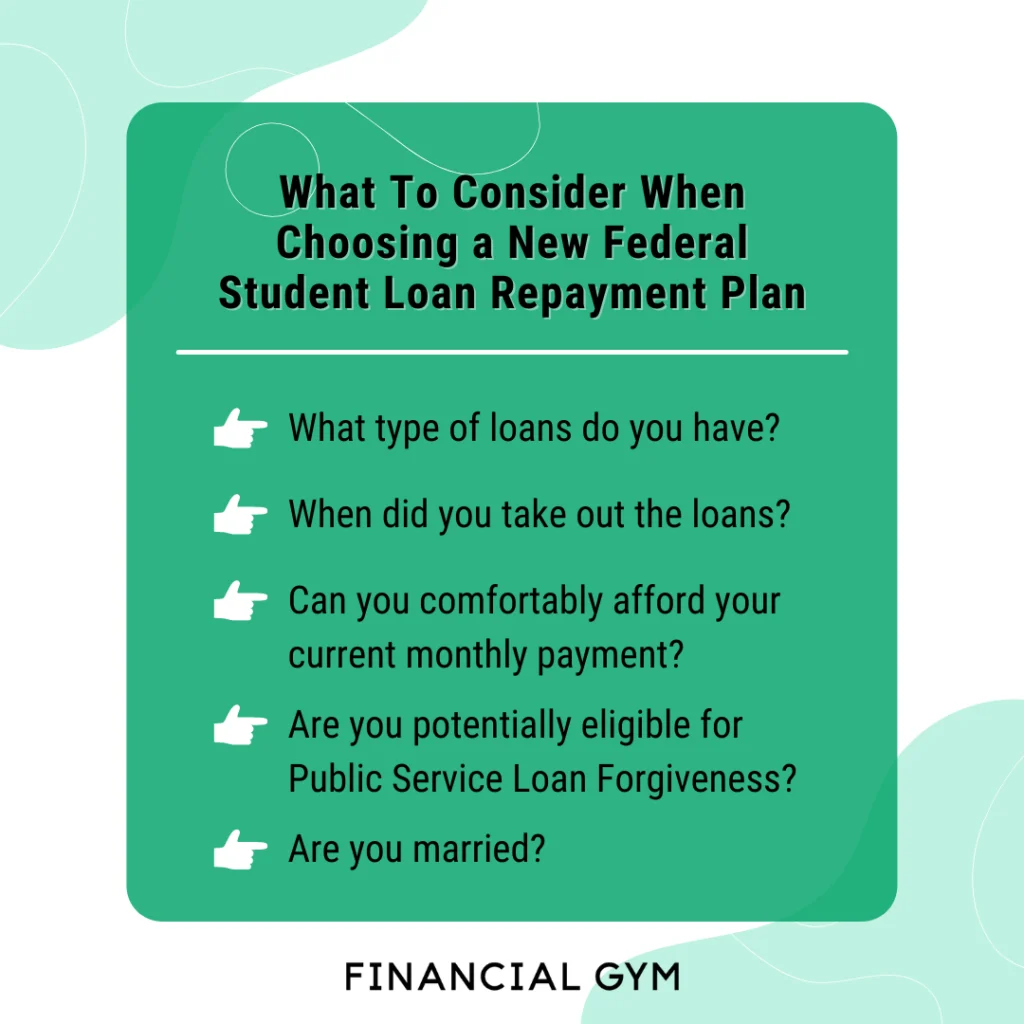
Before evaluating any repayment plans, you should assess your current loans and your personal situation by asking yourself the following questions:
-
What type of loans do you have? Most federal student loans are eligible for any of the repayment plans but there are a few types, like Parent Plus loans & Perkins loans, that have more limited options. You can find out what type of loans you have by logging into Federal Student Aid.
-
When did you take out the loans? Some plans, like Revised Pay As You Earn (REPAYE), are only available to borrowers who received their loans after a certain date. The date on which you received your loans can also determine when you are eligible for forgiveness under the Income-Based Repayment Plan (IBR). You should also be able to find this information from Federal Student Aid or your loan servicer.
-
Can you comfortably afford your current monthly payment? If you can afford your monthly payment under the standard 10-year repayment plan, you’ll typically pay the least in interest and pay your loans off most quickly sticking with that plan.
-
Are you potentially eligible for Public Service Loan Forgiveness? Only income-driven repayment plans qualify for Public Service Loan Forgiveness. If you believe you will be eligible for PSLF, you’ll likely want to choose a plan with the lowest payment.
-
Are you married? Your spouse’s income is counted under some income-driven repayment plans depending on how you file. This may affect the plan you choose and/or how you file your taxes.
Now that you’ve assessed your situation, you can start to see how it aligns with the two overarching types of federal student loans repayments plans: traditional plans based on a specific repayment period and income-driven repayment plans based on (you guessed it!) your income.
The key difference between traditional and income-based repayment plans is how your payment is calculated. Under traditional repayment plans, your payment is determined by your total loan balance and interest rate. Your payment amount will allow you to pay off your loan principal and interest over a specified time period (10-30 years depending on the type of loans and the traditional repayment plan). Traditional repayment plans have either “fixed” or “graduated” payments. With a fixed plan, your payment will remain the same over the entire repayment period. With a graduated plan, your payment starts out lower but increases over time.
Under income-driven repayment plans, your payment is 10-20% of your “discretionary” income, depending on which of the four plans you choose. There is technically no set repayment period under these plans; how quickly you pay them off will be determined by your income and how it changes over time. However, after 20 to 25 years of repayment under one of these plans, the remaining balance will be forgiven. You will owe taxes on the forgiven amount, so make sure to save for that!
All federal student loan borrowers start off on the standard ten-year repayment plan. If you can afford these payments while still saving and avoiding credit card debt, you may want to stick with this plan because it will allow you to pay your loans off most quickly while paying the least amount of interest. If you can’t afford your payment, you should give extra consideration to the income-driven repayment plans.
Remember, you are not stuck with whichever plan you have or choose: you can switch repayment plans as often as you need, but keep in mind that may affect your total loan balance or PSLF eligibility.